Case study 1
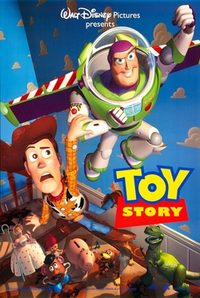
Toy Story (1995)
Pixar. The flawless engine: the protagonist's flaw generates the entire plot.
Want: Woody wants to remain Andy's favorite toy. Need: to learn that love is a partnership to share, not a position to defend.
Wound and flaw: jealousy, pure and simple. And here is the craft lesson: Woody's jealousy is the inciting incident. His plan to knock Buzz behind the dresser knocks Buzz out the window. The flaw does not decorate the plot. It starts it.
Midpoint: Woody and Buzz are captured by Sid. Point of no return. The story stops being about rivalry and starts being about survival together.
All is lost: Buzz sees his own TV commercial, reads "MADE IN TAIWAN," tries to fly, crashes, and collapses into despair as "Mrs. Nesbitt," while Woody's friends exile him for being a murderer. The flaw is at its absolute worst and the want looks dead.
Climax as choice: Woody chooses to go back for Buzz instead of escaping alone. The mutant-toy rebellion, the truck chase, the rocket, Buzz gliding them into Andy's car ("falling with style"). Woody gets what he wanted only by embracing what he needed.
Theme: love is not a position you defend; it is a partnership you make room for. Delivered as a physical image, two toys holding on to each other in free fall, never as a lecture.
Watch the trailer on YouTube
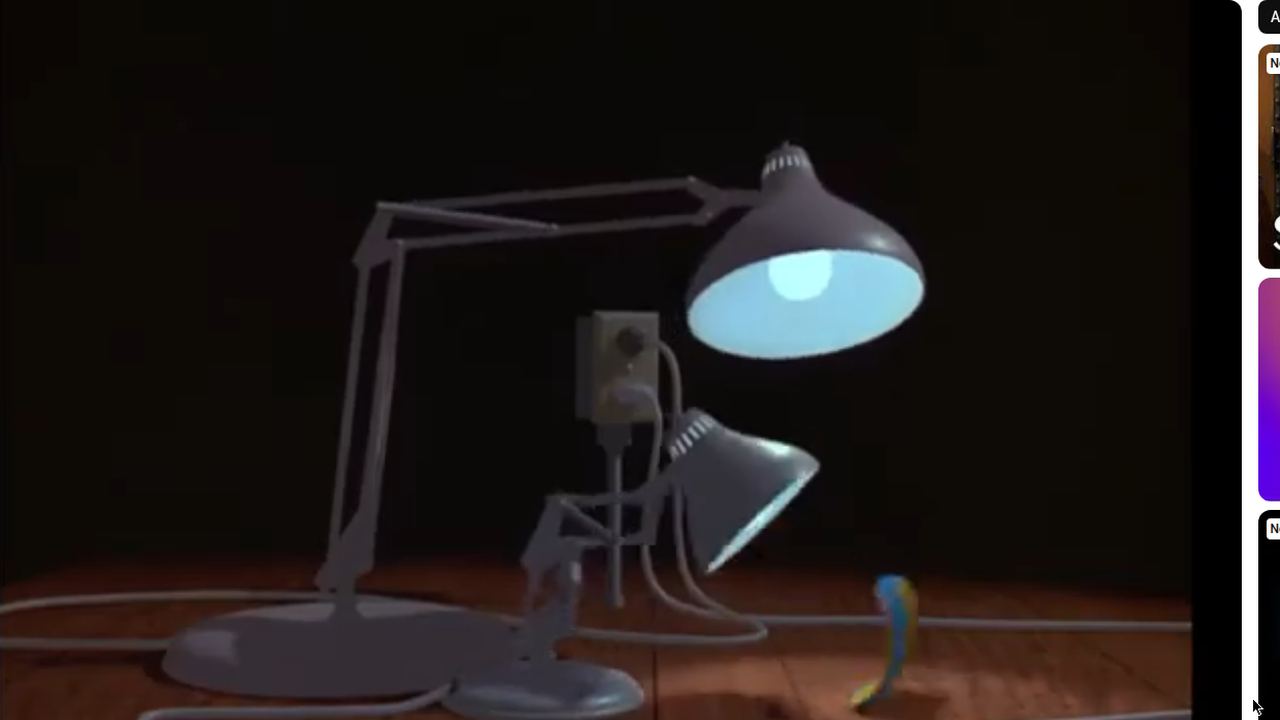
Luxo Jr. (Pixar, 1986). The studio's first lesson, still its best: character is behavior, not dialogue. Two lamps, no words, and you feel like a parent.
Watch Luxo Jr. on YouTube
Case study 2
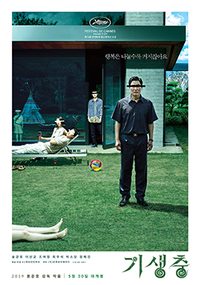
Parasite (2019)
Bong Joon Ho. Theme as architecture: the house is the plot diagram.
Want: the Kims want money and the Parks' life. Need: to see the structure instead of dreaming inside it. Brutally, the film withholds the need. Ki-woo's tragedy is that his need is never met.
Plant: the scholar's rock is introduced as a "gift that brings wealth," a lie the script will detonate in the climax. It sits in the apartment for an hour, doing nothing, until it does everything.
Midpoint: the doorbell rings during the rainstorm. The genre flips from infiltration comedy to home-invasion thriller in a single cut. Few scripts dare a midpoint genre transplant. This one earns it because the theme requires it.
All is lost, in two stages: the flood (rain is leisure for the Parks, catastrophe for the Kims, the same event meaning opposite things by class), then the garden-party massacre.
Climax as choice: Ki-woo's fantasy of buying the house, earning the money, rescuing his father, dissolves back to the semi-basement. The want is granted in fantasy and denied in reality. The identical bookends are the tragedy: no change is the statement.
Theme: you cannot hustle your way out of class; the dream that you can is what keeps you in the basement. Nobody gives a speech about inequality. The script builds a house where the theme is load-bearing, then lets the characters move through it.
Watch the trailer on YouTube

Bao (Pixar, 2018). A whole film built on one image: the thing you made that you cannot let go. The midpoint reframe (the dumpling was the son all along) re-tunes every earlier scene.
Find Bao on YouTube
Case study 3
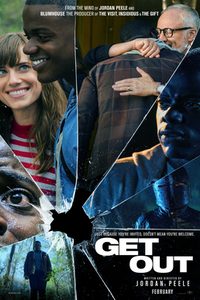
Get Out (2017)
Jordan Peele. The fair-play twist: every revelation was planted in plain sight.
Want: Chris wants to survive the weekend and hold on to Rose. Need: to stop being a passive witness to his own life.
Wound: as a boy he sat watching TV while his mother died alone. Established in the first act, paid off in the climax when he plugs his ears with chair cotton and refuses to sink. The wound becomes the weapon.
Plant: the deer does three acts of work (accident, trophy, weapon). The teacup is introduced as therapy and detonated as the hypnosis trigger. Every clue is filed by the audience under "social satire" when it belongs under "horror plot." That is misdirection by genre, and it is the whole trick.
Midpoint: Missy hypnotizes Chris into the Sunken Place. The horror shifts from social unease to supernatural control. The story is redefined, not just escalated.
All is lost: the shoebox of photos. Rose was hunting all along. Every earlier scene with her replays in the viewer's memory, now poisoned.
Climax as choice: Chris chooses to see clearly and act. He kills his way through the family, but the real victory is the refusal: he will not be passive, he will not sink.
Theme: polite liberalism can be as predatory as open hate; survival means seeing clearly and refusing to sink. Peele never cheats. Write the twist first, then design the camouflage.
Watch the trailer on YouTube
Kitbull (Pixar, 2019). The midpoint is a genre shift: from survival story to trust story. The reframe changes what every earlier scene meant.
Watch Kitbull on YouTube
Case study 4
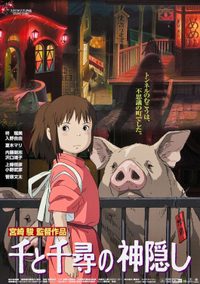
Spirited Away (2001)
Hayao Miyazaki. World-building as character-building: the setting is a workplace, and growing up is learning to work.
Want: Chihiro wants to save her parents and go home. Need: to grow up: to work, to earn her identity rather than inherit it. Yubaba steals her name (Chihiro becomes Sen), and she must earn it back act by act.
Wound and flaw: helplessness, passivity. She is carried through the opening scenes, literally clinging to her mother. The bathhouse will cure this by force.
Midpoint: the Stink Spirit sequence, Sen's first triumph as a worker. The film pivots from "survive the bathhouse" to the No-Face crisis. She has proven she can work; now she must prove she can choose.
All is lost: Haku mortally wounded, No-Face swallowing the staff, Yubaba's final test looming. Everything she has earned is on the table.
Climax as choice: Sen feeds No-Face the medicine, redeems him through work at Zeniba's, frees Haku by remembering his true name (the Kohaku River), and passes Yubaba's test by knowing (none of the pigs are her parents). Knowledge, earned through attention, is the final weapon.
Theme: your name is your self; work, courage, and kindness keep it yours. Miyazaki never pauses to explain the spirit world. Chihiro learns its rules exactly as fast as the audience does, because she is new too. Every piece of exposition is also a survival lesson.
Watch the trailer on YouTube
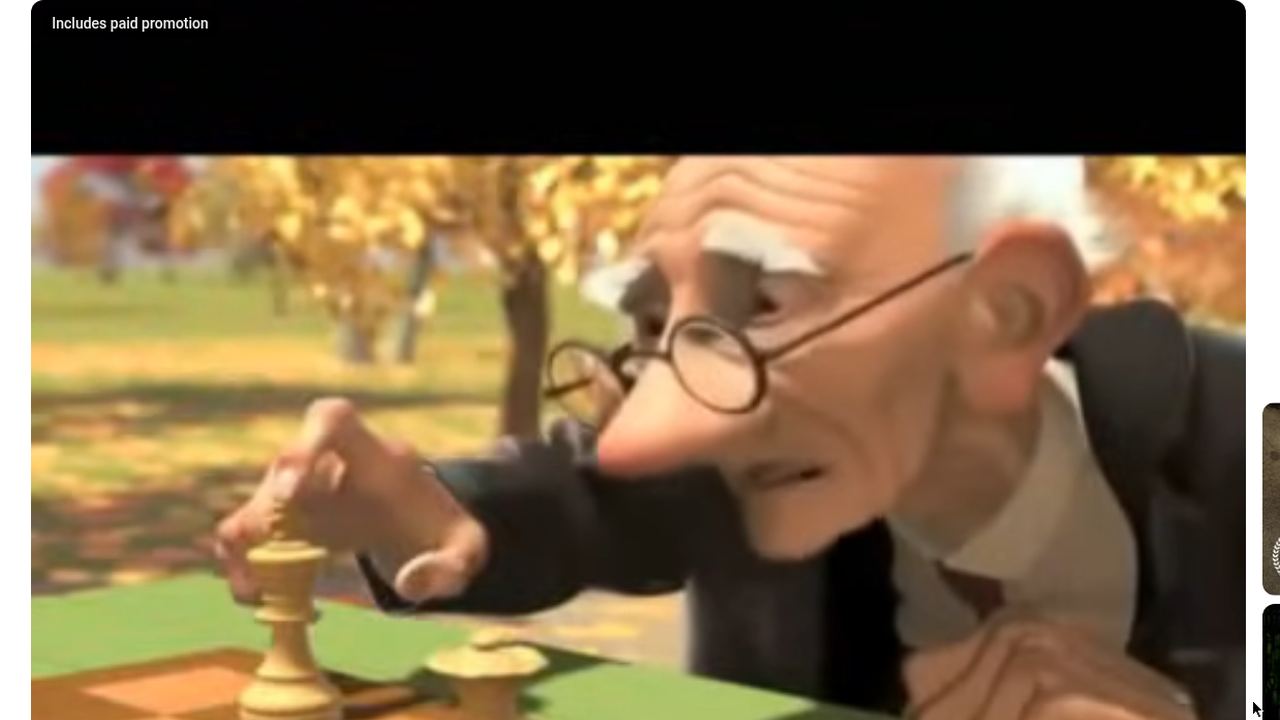
Geri's Game (Pixar, 1997). One character, two opponents. The character web in miniature: every subplot is a variation on the hero's problem.
Watch Geri's Game on YouTube
Patterns across all four: the midpoint reframes rather than escalates. The tragedies resolve the want and deny the need; the redemptions deny or transform the want and grant the need. The wound is the engine, established in the first 15 pages and paid off in the climax. The theme is architecture, never a speech.
Principle 1
A moral argument made physical
Every framework agrees. McKee calls it the controlling idea. Truby calls it the moral argument. The theme is never delivered as dialogue. It is the house in Parasite, the road in Fury Road, the ship in Alien, the depositions in The Social Network.
If you can remove the theme without collapsing the plot, it is not structural yet. Build the world so the theme is load-bearing.
Principle 2
A flawed protagonist
The flaw is not decoration; it is the engine. Woody's jealousy, Mark's spite, Michael's pride, Rick's bitterness, Chris's passivity: in every script, the flaw is the inciting incident, the midpoint trap, and the all-is-lost. Pixar's Rule 1 says it plainly: admire characters for trying, not succeeding.
Design the flaw first. The plot is what the flaw does when pressured. Give the flaw a wound, because wounds explain flaws and fuel climaxes.
Principle 3
One want, one obstacle
The data is blunt: the greatest films feature protagonists with clear, stated goals. When the audience knows what the hero wants, every obstacle has meaning. When they do not, nothing does.
State the want by the end of Act 1. Make it concrete enough to film: escape, win, find, stop, protect. Not "be happy."
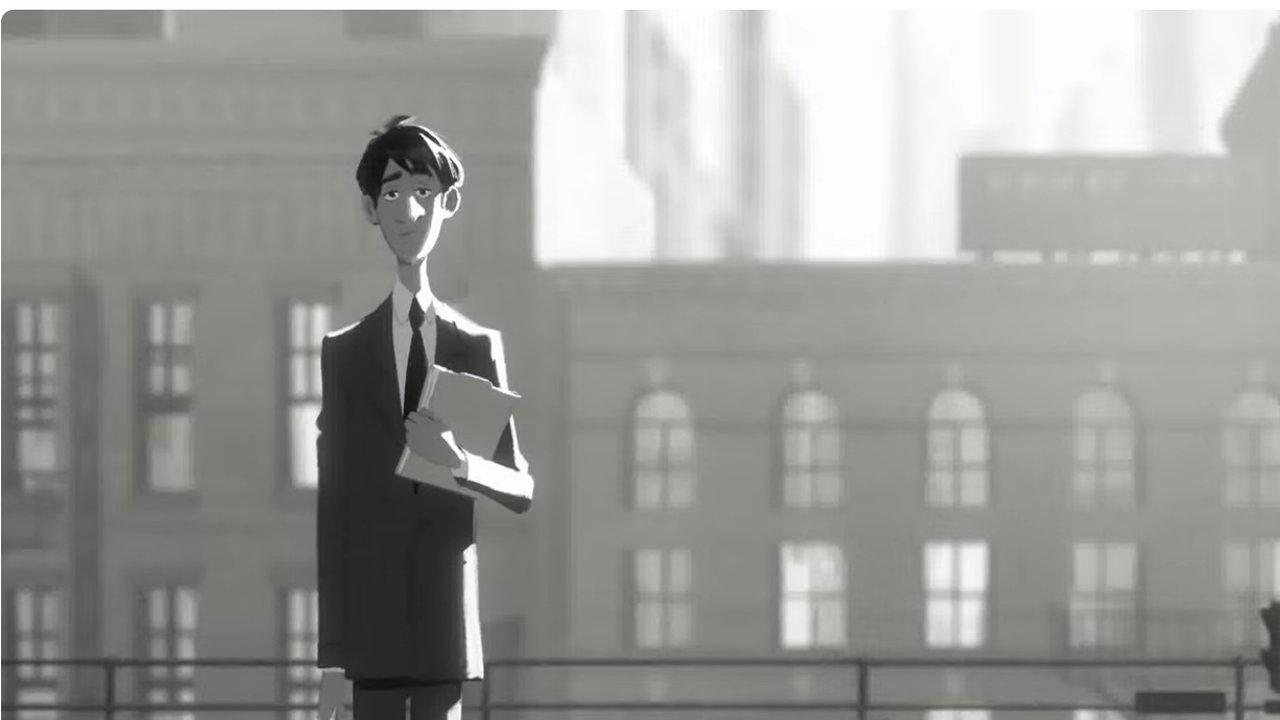
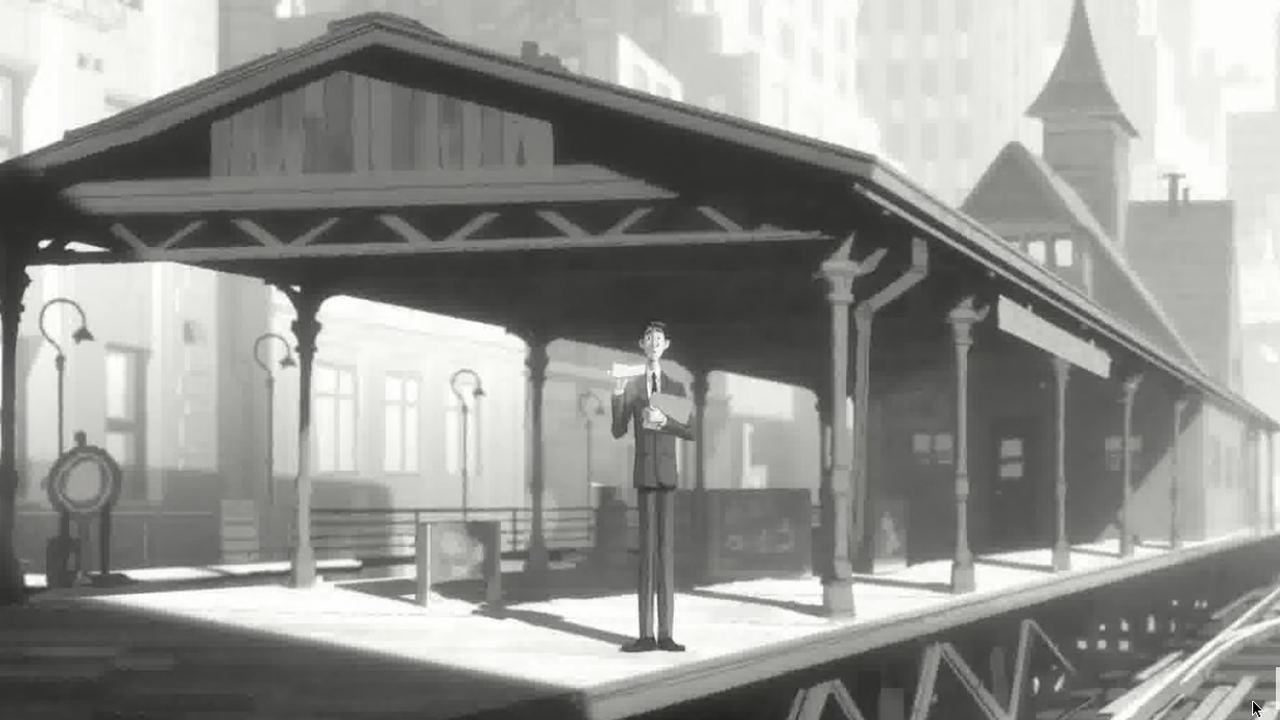
Paperman (Disney, 2012). Theme as architecture: the city itself becomes the matchmaker. No dialogue needed.
Watch Paperman on YouTube
Principle 4
An opponent who wants the same thing
Truby's most portable insight, confirmed across all 12 scripts. Cross wants the water. The company wants the specimen. Immortan Joe wants the Citadel. When both sides want the same object, every scene is a contest. When they want different things, scenes drift into parallel play.
Define your antagonist by shared desire, not by evil. The best villains are the hero's dark mirror: same want, worse methods.
Principle 5
The midpoint reframe
The single most consistent structural move across the 12 scripts and every framework that has a middle. The midpoint does not just raise stakes; it redefines what the story is about. Casablanca's flashback re-tunes Act 1. Parasite flips genre. Fury Road turns the vehicle around. Get Out drops into the Sunken Place.
Design your midpoint as a reframe, not an escalation. After this beat, does the audience understand the story differently? If not, it is not a midpoint.
Principle 6
A climax that tests the theme
McKee's controlling idea is derived from the climax. The climax is the exam the whole film has been studying for. The want/need split tells you the tone: tragedies resolve the want and deny the need (Chinatown, Godfather, Social Network, Parasite); redemptions deny or transform the want and grant the need (Casablanca, Toy Story, Shawshank, Spirited Away).
Build the climax as a choice, not a fight. The fight is the container; the choice is the content.
Principle 7
A world built to express the theme
The bathhouse is a workplace where growing up is learning to work. The Nostromo's systems are the trap. The deposition room is the thesis. The vertical house is class. Setting is never backdrop in a great film; it is the theme made navigable.
Design the world so the protagonist cannot move through it without confronting the theme. Every location should be a question the theme asks.
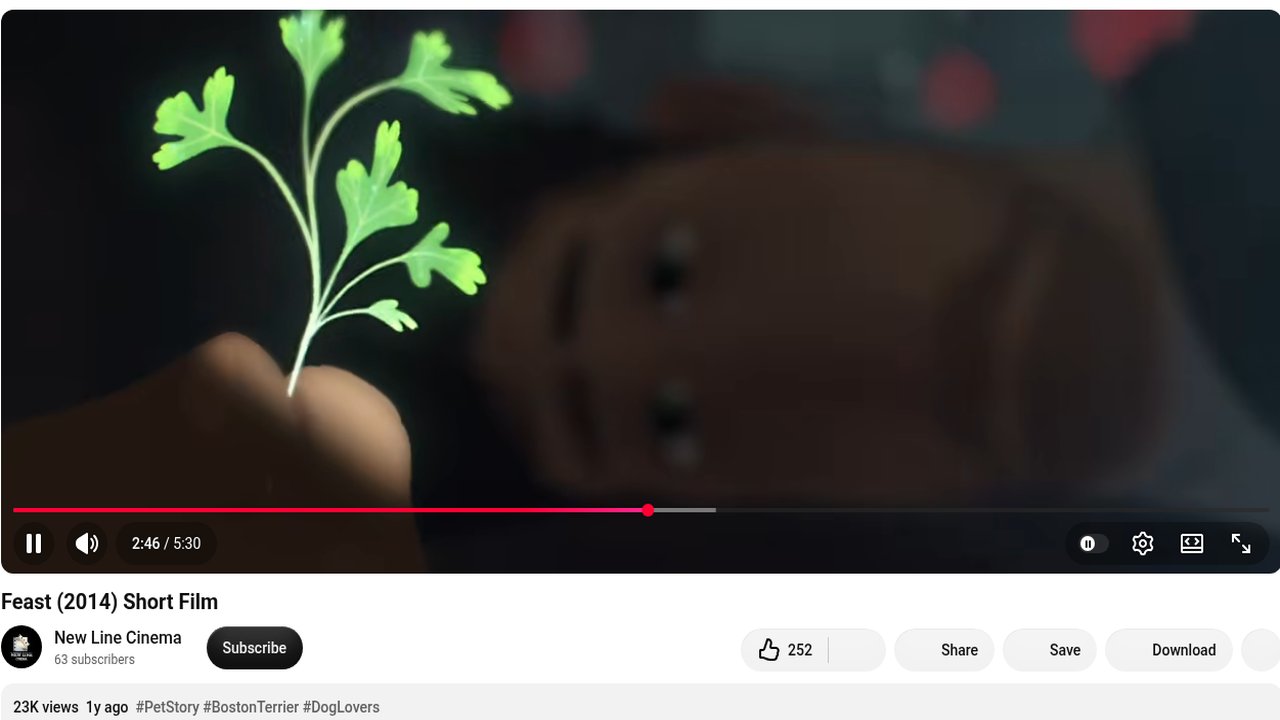
Feast (Disney, 2014). Constraint as storytelling: one POV, one motif (food), one life. The pattern earns the turn.
Watch Feast on YouTube
Principle 8
Transformation encoded in bookends
Harmon draws a circle. Snyder demands the final image mirror the opening image. The scripts obey: Toy Story's surveillance ops, Shawshank's parole hearings, Social Network's breakup and unanswered request, Godfather's wedding and baptism, Spirited Away's tunnel. The difference between the bookends is the arc.
Write your opening and final images first (Pixar Rule 7: nail the ending before the middle). The gap between them is your movie.
Principle 9
Plant early, camouflage always
Every great script hides its climax tools in plain sight: Shawshank's rock hammer as a gag, Get Out's teacup as therapy, Parasite's scholar's rock as a gift. The climax then contains no new information, only recontextualized old information.
That is why great endings feel inevitable rather than clever. For every payoff, plant twice, in two different disguises.
Principle 10
Let the audience work
The Social Network makes you the jury. Get Out rewards the second viewing. Kishotenketsu asks you to re-read everything after the twist. The films people call great are the ones they cannot stop thinking about.
Do not explain the theme. Let them assemble it. Thinking is participation, and participation is emotion.
IMDb Top 250: drama dominates, crime rates highest. Drama is tagged on roughly 164 of the 250 films. Crime films have the highest average rating among major genres (about 8.38). The all-time top: Shawshank 9.3, The Godfather 9.2, The Dark Knight 9.1. What the top 20 share structurally: a protagonist with a clear, stated goal; a transformation or moral-testing arc; an antagonist embodying the opposing value; stakes that escalate through irreversible choices; an earned ending where the climax tests the theme. Caveat: the canon has a demographic bias baked in. A 50,000-vote floor removes 51% of films with 60%+ women audiences.
Oscar Best Picture: long, dramatic, serious, and rarely funny. Nearly 70% of winners exceed 2 hours (about 80% since 1960). Drama is tagged on 89% of winners. Comedy has not won since Annie Hall in 1977. Sci-fi has zero wins in eight decades. True stories dominate: since 2000, roughly 15 winners were biopics. And awards have decoupled from commerce: 73% of recent winners missed the UK box-office top ten.
Box office: originals are nearly extinct at the top. Only 6 of the 100 highest-grossing films of all time are standalone, non-franchise, non-IP films: Titanic ($2.26B, still the highest-grossing standalone ever), Oppenheimer, Bohemian Rhapsody, Inception, Hi Mom, and Coco. What the giants share, the Cameron formula: a simple emotional spine under spectacle, technology pushed forward for the film's sake, and modest openings carried by extraordinary legs. Titanic opened around $26M. The phenomenon was word of mouth, not opening weekend.
What correlates with ratings: longer films score higher (140+ minute films averaged 70% Fresh vs 64% for 120-140). Genre is the principal determinant of rating behavior for both critics and audiences. Likeable stars do measurable emotional work: actor familiarity and likeability correlated at r=0.41 with stronger empathic reactions. Casting stars is emotional engineering, not vanity. And an honesty note: no published study directly ties protagonist goal clarity to ratings. That one is craft wisdom, not science.
The most common themes across canonical greatest-films lists, ranked by frequency: redemption, identity, love, hope, justice and freedom. If your film is about one of these, you are in the deepest possible company. If it is about something else, you had better execute flawlessly, because the canon rewards the familiar done perfectly.